Want to know more about dental fillings and what to expect before, during, or after the procedure?
You may be reeling over the recent news that you have a cavity and would like to know more about how to proceed.
Then follow along—this blog will reveal the reality of dental fillings!
Dental Fillings: What to Expect If You’ve Never Had a Cavity
If you’ve never had a cavity before (but found out recently that you have one, two, or three…), it’s good to ask your dentist questions about the size of the cavity and filling options (if the decay is serious, your cavity may require a crown instead of a filling).
Perhaps your dentist did “fill you in”, but you were in such a state of shock that you—the Brushing Champion—would ever get a cavity, that his debrief on fillings went in one ear and out the other.
Rewind back to that fateful day at the dental office.
It was nearing the end of your regular teeth cleaning appointment, and just as you thought you were home free, those dreaded words came from your dentist’s mouth: “You have a cavity. We’ll need to book you in for a filling.”
You felt your stomach sink, knowing that not only will you have to shelve out more money for dental care, but you didn’t and still don’t know what to expect as you’ve never had a filling before.
You felt your stomach sink, knowing that not only will you have to shelve out more money for dental care, but you didn’t and still don’t know what to expect as you’ve never had a filling before.
Keep reading to know what to expect when you get a filling and your worries will be put to rest.
Dental Fillings: What To Expect Before Procedure
Feeling nervous before getting a filling is completely normal (especially if you’ve never had one before). Dentists will take certain measures before the procedure to ensure their patient has a positive experience. If you’re wondering, “are dental fillings painful?”, the general consensus is “no”.
Pre-procedure, dentists generally inject a local anesthetic (a.k.a “freezing”) to ensure the patient has a pain-free experience.
And, before the local anesthetic injection, dentists will often apply a numbing topical (gel-like) anesthetic to the patient’s cheeks or gums to alleviate any discomfort felt by the injection itself.
Understanding Dental Fillings: What Happens During a Dental Filling?
When your mouth is numb from local anesthetic and there are multiple things going on at once, it’s hard to know exactly what’s happening during a dental filling.
We can provide you with some insight to help put your mind at ease.
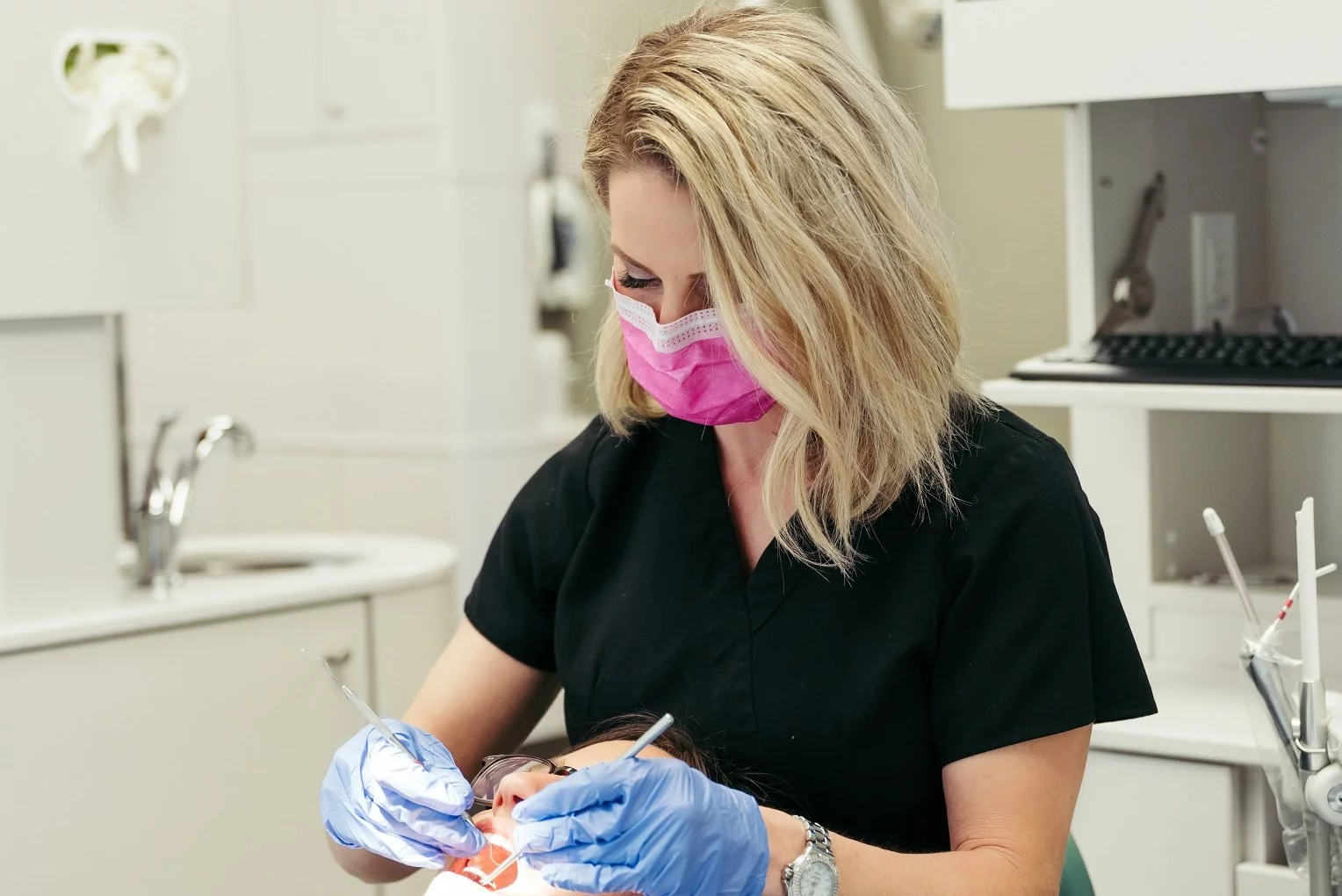
After the dentist confirms you’re numb, he or she will remove the tooth decay and prepare the tooth for the filling. The specific method used to insert the filling depends on the type of filling you’re getting.
Most fillings are done in one of two ways:
- Direct Filling – These fillings go right into the cavity after your dentist has cleaned out the decay. Amalgam (or silver) fillings and plastic (or white) fillings are examples of direct fillings. They harden quickly. Most of the time, you will be able to have a direct filling put in place in one appointment.
- Indirect Filling – Examples of this type of filling are crowns (or caps) and inlays. They are custom made in a lab to fit your tooth. Your dentist cements the filling in place. Most indirect fillings take two or more appointments to complete
How long does a dental filling take?
Since a filling is a common and relatively simple procedure, it doesn’t take very long to complete. A typical filling procedure only takes about an hour. If you have several cavities that need to be filled, or if you’re having an indirect filling done, your dentist may treat them over multiple visits.
Dental Fillings: What To Expect Afterwards
The procedure will go by quickly and before you know it, you’ll be out of the dental chair and booking your follow-up appointment with the receptionist. However, you still may have some questions about what to expect after the procedure is done.
Can I brush my teeth after a filling?
You can resume brushing twice a day and flossing daily immediately after you receive your filling. However, you may experience some soreness or tooth sensitivity.
This can last for hours or days after the procedure. Avoid foods and drinks that can trigger sensitivity, including very hot or cold drinks, sugary foods, and soft drinks. If the sensitivity doesn’t go away, or if the soreness gets worse, see your dentist.
Some types of fillings need time to fully set. Sticky or hard foods can sometimes dislodge a new filling that hasn’t fully hardened, so don’t eat these types of foods until the filling has set. Ask your dentist how long you should wait to ensure you don’t damage your filling.
Fillings may have sharp edges, even after being polished by the dentist. They might not be noticeable at first due to the anesthetic, but they can cause discomfort once the numbness wears off. If your new filling feels sharp, tell your dentist so they can fix it.
Can you drive after a dental filling?
Most people can drive themselves home after getting a dental filling because most fillings are applied after patients have been given freezing. However, if the numbness causes impaired vision, you might have to wait until the anesthesia wears off completely before hopping into your vehicle.
Dental Fillings: Book Your Dental Appointment
Ready to book your dental filling appointment? Or still hesitant?
We get it; cavities can be costly and inconvenient (although, we do offer payment options). However, you’ll often hear that dental fillings will actually benefit you (if you have cavities). This is true.
Tooth fillings can help prevent bigger dental problems down the road. Choosing not to have a filling (when you need one) can lead to you needing a tooth extraction or root canal—two procedures that are much more expensive and uncomfortable than a filling.
The more preventative measures your dentist implements into your dental care and the more willing you are to follow their guidance, the healthier you’ll be.
Cavity Prevention and Dental Fillings What To Expect Going Forward With Your Dental Care
Brushing your teeth 2-3 times a day, flossing, and seeing your dentist for regular hygiene maintenance are some measures you can take to prevent getting more cavities.
However, based on tooth anatomy, age, pH levels in the mouth, and other underlying factors, some people are more prone to cavities regardless of how much care they put into their teeth. For example, teeth that have naturally deep grooves are more susceptible to cavities because they are likely to catch food particles, sugars, and destructive bacteria easily.
Don’t be too hard on yourself if you do get a cavity. Instead, be pro-active and book an appointment with a trustworthy and efficient dentist.
At New Look Dental, we pride ourselves on our attention to detail, efficiency, and oral health knowledge.